Both systems retain soil for deep basements – but depth, groundwater, neighbouring structures and budget decide which one is right for your site.
Why basement shoring matters
Urban plots are small and neighbours are close. Every extra basement level adds parking and value – but only if the excavation is retained safely.
Diaphragm walls
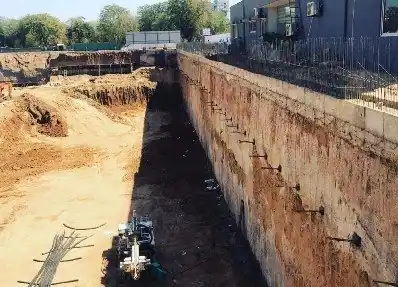
D-walls are cast in situ under bentonite slurry in panels. They are stiff, watertight and can be used as the permanent basement wall and even as a foundation. They are ideal for 2–3 level basements, high groundwater and sensitive neighbouring buildings.
Secant pile walls
Secant walls use intersecting bored piles. They need lighter equipment and can be economical for moderate depths, with good water cut-off.
How to decide
- Depth: deeper excavations favour D-walls.
- Water table: both provide cut-off; D-wall joints are more reliable for high heads.
- Space: D-walls give the thinnest wall for the most usable basement area.
- Programme: D-walls combine temporary and permanent works.
Share your soil report with our engineers and we'll recommend the most economical system.